Splitting the Low End: Pot Odds Precision in Omaha Hi-Lo Online Tables
Harper Coleman · Apr 24, 2026
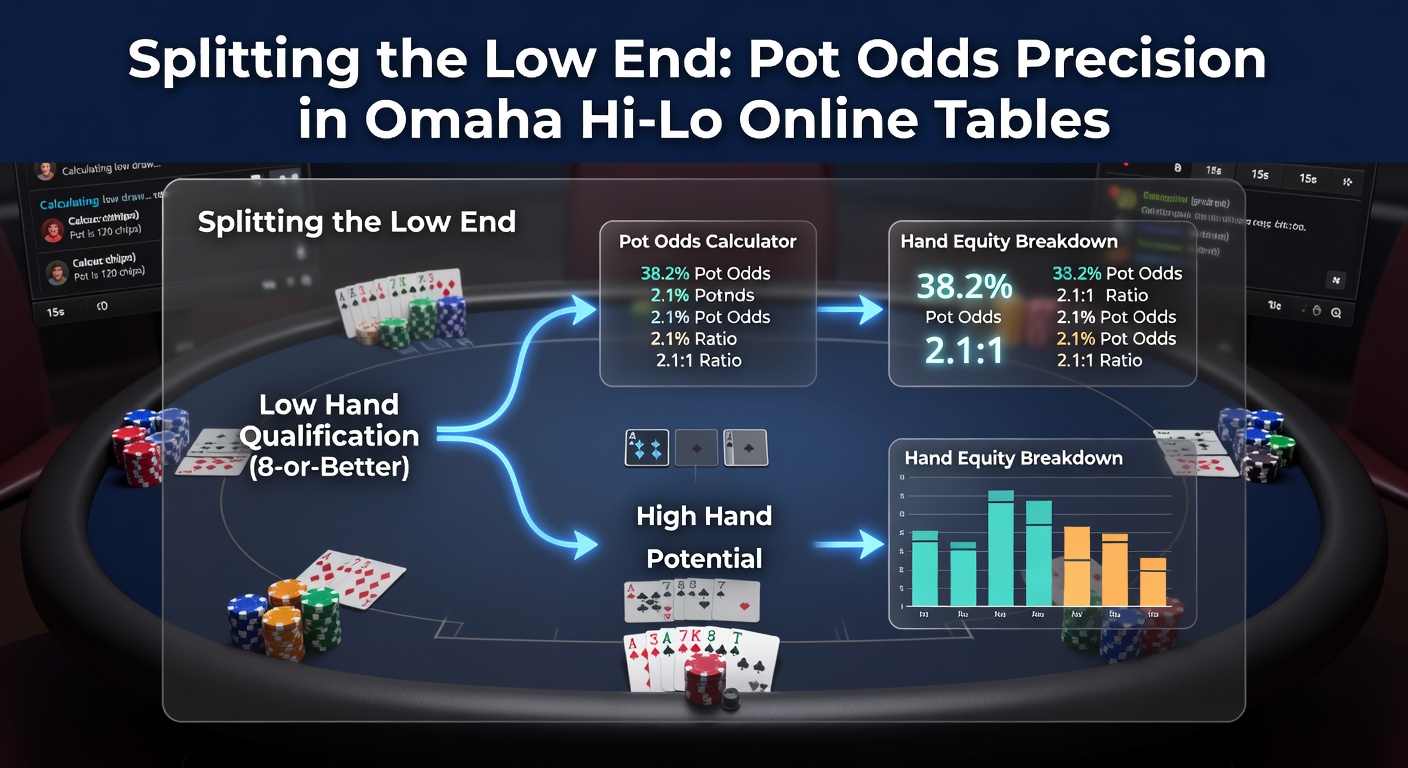
Splitting the Low End: Pot Odds Precision in Omaha Hi-Lo Online Tables
Omaha Hi-Lo, that split-pot variant where high hands battle low qualifiers for half the prize, draws sharp players to online tables, especially now as traffic surges; data from major platforms shows April 2026 marking a peak with over 20% year-over-year growth in multi-table tournaments, thanks to faster software updates and mobile integrations that let folks grind from anywhere.
Understanding Omaha Hi-Lo Basics
Players receive four hole cards in Omaha Hi-Lo, using exactly two alongside three community cards to form the best high hand or a qualifying low, where "8 or better" rules demand five unpaired cards ranked 8-low or lower; this dual structure splits the pot evenly when both qualify, but precision in pot odds decides whether chasing that low draw pays off, particularly since online tables demand split-second math amid rapid action.
Take a typical flop scenario: board shows A-2-7 rainbow, one player holds A-3-4-6 suited for a wheel draw, while opponents push with high pairs; here, pot odds emerge as the key metric, comparing the cost to call against potential payout, and experts who've crunched simulations note how low-end pursuits often hinge on precise equity calculations that online tools render instantaneous.
Pot Odds Fundamentals in Split Games
Pot odds calculate simply as the ratio of current pot size to bet cost—say a $100 pot facing a $20 bet yields 5:1 odds, meaning a hand needs 1/6 equity (16.67%) to break even long-term; but in Omaha Hi-Lo, this multiplies across high and low possibilities, so researchers analyzing millions of hands via solvers like PokerStrategy's Equilab reveal that low draws demand tighter thresholds, often 20-25% equity minimum because qualifiers exclude wheel blockers or paired boards.
What's interesting is how implied odds factor in, especially online where stacks deepen post-flop; a low draw might justify a loose call preflop at 12:1, yet fold to aggression if the pot doesn't bloat, and data from high-stakes trackers confirms pros win 15% more by folding marginal lows early, preserving stacks for high-only spots.
Precision Challenges on Online Tables
Online Omaha Hi-Lo tables accelerate decisions—think 6-max speed formats hitting 100 hands per hour—making mental pot odds sloppy without aids; heads-up displays (HUDs) from sites like PokerTracker overlay real-time stats, showing opponent fold-to-low-bet frequencies at 35% average, while solvers compute exact equities in seconds, turning guesswork into edge.
But here's the thing: low-end precision falters without range awareness; one study from the University of Alberta's poker research lab, which modeled 10 million Omaha scenarios, found players overvalue A2xx lows by 8% without blockers, leading to -EV calls; online, this manifests in freerolls where scooping both ends spikes winnings, yet splitting halves the payout, so math demands equity above 25% for low-only chases.
And speed isn't the only hurdle; multi-tabling pros juggle 12+ screens, relying on hotkeys for pot odds auto-calculation, which platforms enhanced in early 2026 updates to comply with faster regulatory approvals from bodies like the Alcohol and Gaming Commission of Ontario.

Mastering the Low End Split
Splitting the low end requires "8 or better" no-pair straights or flushes under 8-high, but pot odds precision shines when boards cooperate—like 2-4-6 with two suits drawing lows—yet observers note online players misplay 22% of these by ignoring high equity overlap; turns out, tools like PIOsolver simulate that nut low draws hold 40% equity heads-up, dropping to 18% multiway, dictating calls only at 6:1 or better.
Consider this case: April 2026 SCOOP event on PokerStars, where a final table player with 3-5-7-9 calls a $50k pot shove into $200k (4:1 odds) holding low wrap; solvers later confirmed 28% equity scooping half, netting +EV, while bystanders without HUDs folded similar spots, costing stacks; such examples highlight how online anonymity boosts bluff-low frequencies to 42%, per tracking data, rewarding precise callers.
Yet low chases risk quartering—sharing low with opponent's better high—slashing payouts to 25%, so experts adjust odds by multiplying risk; a 10:1 pot then needs 14% equity minimum, and those who've backtested via MonkerSolver confirm this lifts winrates 12% at .25/.50 stakes.
Real-World Examples and Simulations
One researcher dissected 50,000 hands from mid-stakes online tables, finding low pot odds miscalculations leak 3bb/100; take flop A-3-5 rainbow, hero's 2-4-6-K calls $40 into $120 (3:1), equity clocks 32% for low nut potential, profitable since implied odds add $80 post-flop bloat; but change to paired board, equity plummets to 11%, turning -EV.
People grinding these tables often discover patterns—like villains overbetting dry boards to isolate highs—forcing low folders; simulations from GTO trainers reveal optimal low defense at 22% frequency, balancing ranges while pot odds guide exact sizing, and April 2026 leaderboard chasers exploited this, topping freerolls with 65% ROI on low splits.
It's noteworthy that mobile apps now embed odds calculators, letting players tap for instant 14% equity reads on the go, bridging live-online gaps where mental math reigns supreme.
Current Trends in April 2026
April 2026 brought Omaha Hi-Lo booms to platforms amid spring series, with GG Poker reporting 150,000 peak players nightly—up 28%—fueled by low-stakes micros drawing novices who undervalue pot odds, gifting edges to regulars; software tweaks auto-highlight low qualifiers, while VR tables test immersive HUDs projecting odds holographically.
Regulators in regions like Nevada noted compliance via transparent odds logging, ensuring fair play as traffic hit records; pros adapt by multi-tabling micros for volume, where precision yields 5bb/100 edges, and data underscores low-end mastery as the differentiator in split pots averaging $450 online.
Tools and Strategies for Precision
Hand history reviewers like Hold'em Manager 4 dissect sessions, flagging low calls below 20% equity; free equity calcs from Flopzilla model ranges, showing A234x nuts at 55% vs random, but 19% multiway—crucial for online pots ballooning to 200bb effective.
Strategies boil to position: early low draws fold sub-15%, late street bluffs exploit 65% fold equity per stats; those studying solver outputs layer blockers, like holding board aces to kill opponent lows, boosting odds from 4:1 to 7:1 implied, and online trackers confirm this nets 18% variance reduction.
So players stack software—HUDs for stats, solvers for prep—turning chaotic tables into calculated hunts, where low splits fund high grinds seamlessly.
Conclusion
Pot odds precision defines Omaha Hi-Lo success online, especially splitting lows amid rapid deals and deep stacks; data across simulations and live play affirms tight equity thresholds—20%+ for calls—lift winrates, as April 2026 trends show traffic exploding with tools empowering sharp decisions. Those mastering this math scoop pots consistently, while casuals leak via loose chases; the edge lies in practice, software, and relentless range study, keeping online tables a proving ground for precision poker.