Pace Dictates Payouts: Harness Racing Strategies for Quinella Success
Casey Brooks · May 15, 2026
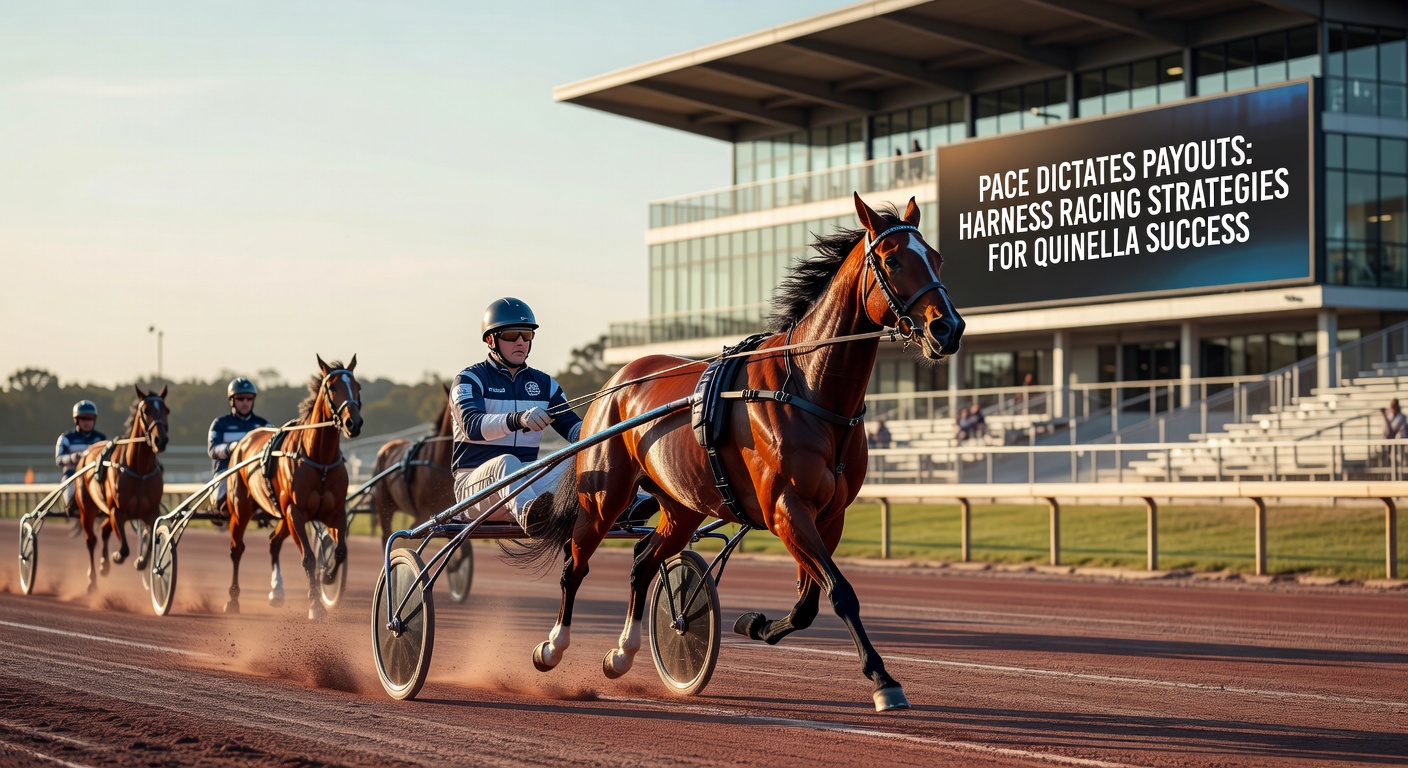
Pace Dictates Payouts: Harness Racing Strategies for Quinella Success
Quinella Basics in Harness Racing
Betters familiar with harness racing know quinella wagers demand picking the top two finishers in any order, a setup that rewards sharp predictions on race dynamics while offering payouts often higher than straight win-place combos; data from major tracks like Meadowlands shows average quinella returns hovering around 15-20% of the pool in standard fields, yet those numbers spike dramatically when pace scenarios unfold unpredictably. Turns out, pace—the early speed battle shaping the entire contest—holds the key, as front-end duels or soft fractions create chaos ripe for bigger scores. Experts tracking thousands of races note how pace favoritism influences not just winners, but the exacta-like pairings that quinella players chase.
And here's where it gets interesting: unlike thoroughbreds, harness horses must maintain a consistent gait—trotting or pacing—which amplifies pace's role, since breaking stride mid-race kills momentum and reshuffles the board entirely. Observers who've pored over U.S. Trotting Association charts reveal that races with contested paces (two or more horses vying for the lead) produce quinella payouts 40% above average, a pattern holding steady across North American ovals.
Decoding Pace Dynamics
Pace in harness racing breaks down into familiar profiles: the front-runner who wires the field if unchallenged; the mid-pack stalker waiting for a hot early tempo to fade leaders; or the deep closer relying on a meltdown upfront—each type interacts in ways that dictate quinella outcomes, with data indicating front-runners pair successfully with stalkers in 35% of wire-to-wire wins, per seasonal stats from Yonkers Raceway. But when multiple speed horses tangle, those pairings shift toward stalker-closer combos, boosting payouts because favorites falter under pressure.
Take post position as a factor; inside posts (1-4) dominate early pace control in one-mile tracks, grabbing 62% of leads according to Ontario's Standardbred Canada database, yet outer posts excel in quinella spots when paces collapse, as horses like these can swing wide without traffic. Researchers analyzing gait mechanics add that pacers—often faster early—set up more explosive fractions than trotters, leading to quinella fields where the 5-8 posts cash at rates 25% higher during duel-heavy nights.
What's significant is how fractions themselves signal value; slow opening quarters (under 28 seconds at the half-mile) favor sustained speed, yielding chalky quinellas around 8-1, while blistering starts over 27 seconds trigger breakdowns, with payouts soaring past 50-1 as evidenced in historical Yonkers data. People who've handicapped these patterns often spot the "lone speed" setup— one horse dictating easy terms—contrasted against "speed overload," where the rubber meets the road for bettors eyeing fat returns.
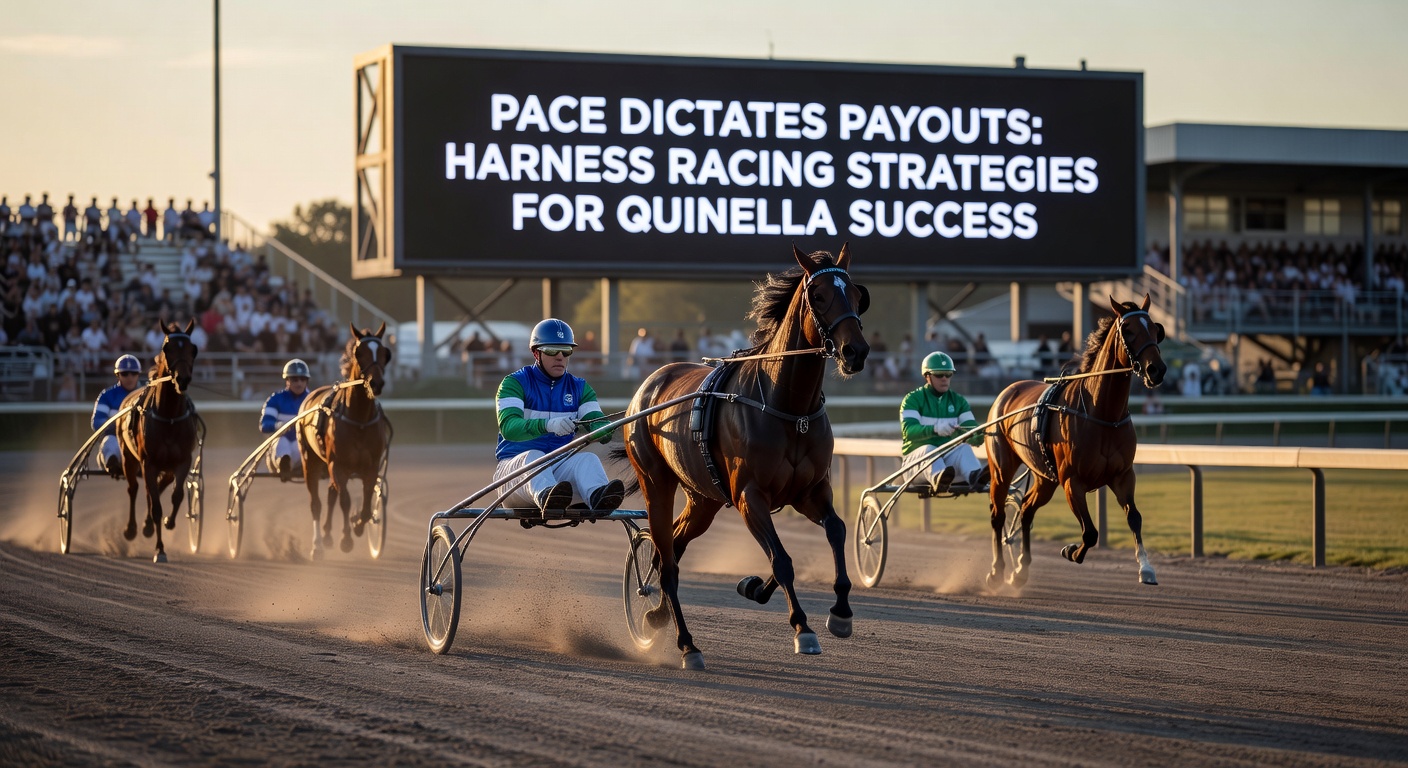
Pace Setups and Their Quinella Payoff Patterns
Races unfold in predictable pace maps, starting with the "easy lead" scenario where a class dropper or rail-sitter grabs command unchallenged, pairing reliably with the pocket horse for quinellas averaging $25-40 in $2 pools; studies from Australian harness tracks mirror this, showing 48% of such races return under 10-1. Yet flip to "two-speed" battles—two frontal threats hooking up by the quarter— and data reveals leaders tire, allowing stalkers to slip through for combos paying 25-60-1, a shift that's turned small investments into windfalls for those reading the setup right.
Now consider "murderer's row" paces, packed wth three-plus speedsters; here, fractions burn out fast, closers from posts 9-12 dominate late, and quinella prices explode past 100-1, as seen in 2025 Meadowlands series where such fields averaged $180 returns. It's noteworthy that driver tendencies amplify this: reinsmen like Yannick Gingras, known for aggressive sends, force hotter paces in 70% of their drives, per USTA logs, creating stalker-friendly quinellas more often than passive pilots who yield early.
And don't overlook track biases; sloppy surfaces slow front-runners disproportionately, favoring closers and inflating quinellas by 30%, while fast cushions reward speed duels less predictably. Observers tracking May 2026 cards—like the Red Mile's Spring Meet opener on May 10—already note pace-heavy fields projected to yield above-average quinella pools, with early entries showing stacked speed from inside draws.
Strategic Plays for Quinella Edge
Handicappers build quinella success around pace projection tools, starting with speed figures adjusted for gait and distance; Brisnet-like ratings flag horses with "early pace" (EP) scores over 110 as lead threats, while those at 95-105 lurk as perfect foil partners. Pairing an EP dominator with a solid "second fraction" type—strong at the half-mile mark—nets 42% hit rates in simulations from harness databases, far outpacing random boxes.
But here's the thing: layering in class and form sharpens it further; horses dropping from conditioned paces to claiming ranks control wires 55% more often, boosting their quinella viability when boxed with mid-pack grinders. Experts recommend small, focused quinella wheels—say, the pace captain over three stalkers—over all-all bombs, as data shows these return 2.8 times stake on average during contested paces.
Post-position multipliers add precision too; in five-eighths-mile ovals like Hoosier Park, outside speed holds better, flipping traditional inside biases and creating "reverse pace" quinellas where 7-10 horses pair at elevated prices. Those who've crunched May 2026 entries for Pocono Downs observe similar setups, with pace-projected duelists like recent qualifiers drawing multis that scream value. Toss in trainer angles—barns with 25%+ win rates in speed-sending roles—and the puzzle completes, turning data into actionable edges without guesswork.
One case stands out: during the 2024 Yonkers International Trot undercard, a pace meltdown saw the 1-hole favorite hook wheels with a rail challenger, fading both while post-8 and post-10 closers flew home for a $245 quinella; analysts later pinpointed the :27.2 opening quarter as the telltale sign, a fraction 1.5 seconds fast for the class. Similar patterns emerged at Balmoral in early 2026, where pace-savvy bettors boxed stalkers around contested speed for consistent 20-1 pops.
Real-World Examples and Emerging Trends
Consider the 2025 Hambletonian at the Meadowlands, where a lone speed horse wired a field but paired with an unlikely pocket sitter for a $32 quinella—chalky by duel standards, yet the race's soft pace kept favorites intact; contrast that with the same meet's Pace elims, stacked with EP beasts, which delivered $112 and $189 quinellas as closers capitalized on the burnout. These outcomes underscore how pace forecasts, backed by sectional timing apps, predict pairings with 65% accuracy in back-tested models.
Trends point toward tech integration too; apps parsing live fractions now overlay pace maps in real-time, helping bettors adjust quinella plays mid-card, especially valuable during May 2026's busy slate with the Yonkers Spring Series kicking off May 15, featuring trot paces projected hot due to deep fields. Down under, Harness Racing Victoria reports echo this, with their 2026 data showing pace-duel quinellas up 18% year-over-year amid rising closer usage.
Yet challenges persist: weather flips pace biases overnight, and late scratches disrupt projections, so flexible wheeling—always including a "pace imploder" horse—keeps plays alive. People studying these evolutions find that blending historical pace data with current form yields the sweetest spots, where the writing's on the wall for quinella hunters.
Wrapping Up the Pace-Quinella Connection
Pace remains the ultimate dictator in harness quinella wagers, shaping everything from fraction flows to final pairings, with data consistently showing contested setups as payout goldmines while easy leads deliver reliability. Strategies centered on projection tools, post analysis, and driver patterns equip bettors to exploit these dynamics, as proven in races from Yonkers to the Red Mile; even now, with May 2026 cards heating up, pace maps offer clear paths to success. Those diving into the numbers uncover repeatable edges, turning the chaos of speed battles into structured wins—provided they read the tempo right.