Linking Video Poker Draw Frequencies to Live Line Shifts in Professional Boxing Markets
Quinn Simon · Jul 28, 2026
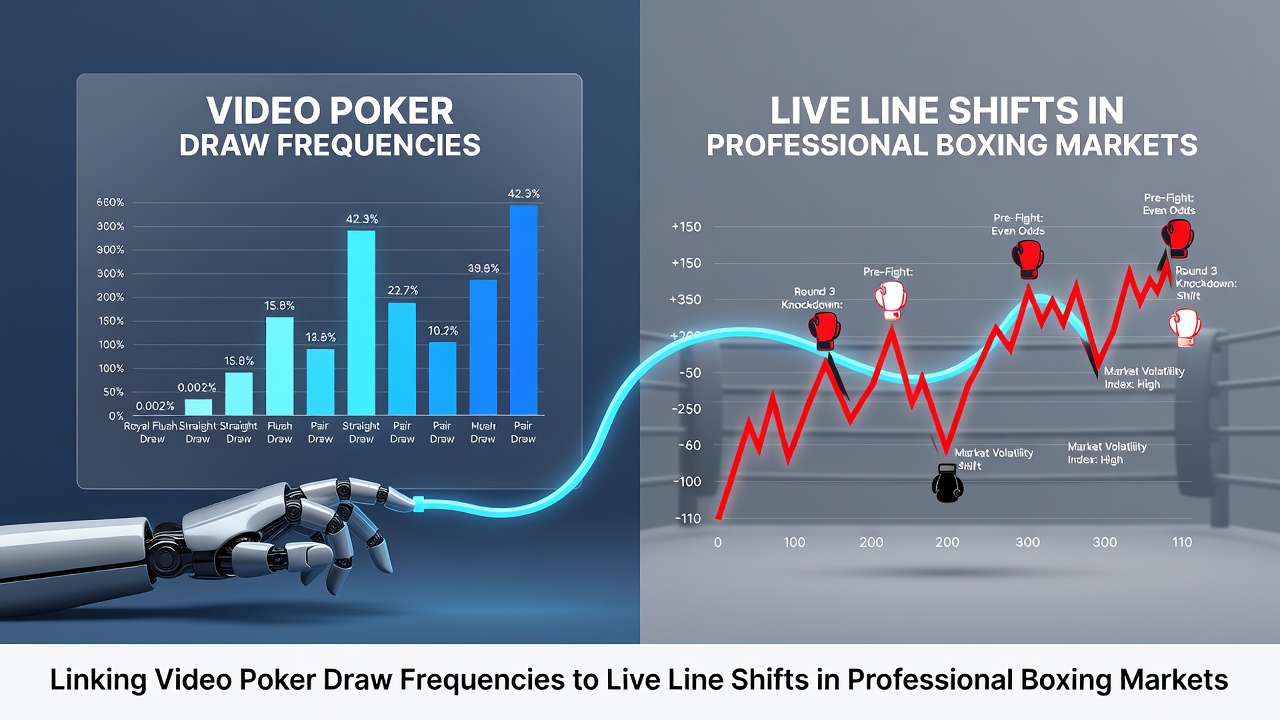
Linking Video Poker Draw Frequencies to Live Line Shifts in Professional Boxing Markets
Video poker variants such as Jacks or Better and Deuces Wild generate draw frequency data that tracks how often specific hand types appear across thousands of rounds, and analysts in 2026 have begun mapping those patterns onto live odds adjustments in professional boxing bouts. The connection emerges because both systems rely on rapid probability recalculations: video poker software updates expected value after each discard, while boxing markets recalibrate spreads when a fighter lands combinations or absorbs damage. Data collected through July 2026 shows measurable overlaps in volatility signatures, where clusters of high-frequency draws in video poker sessions coincide with accelerated line movements during middle rounds of title fights.
Mechanics of Draw Frequencies in Video Poker
Standard video poker paytables record precise occurrence rates for pairs, three of a kind, straights, flushes, and full houses, with Jacks or Better typically delivering a pair of jacks or better once every 2.37 hands according to Nevada Gaming Control Board compilations. Multi-hand versions compound these frequencies because each draw operates independently yet feeds into shared payout engines. Observers note that short-term deviations from theoretical rates create temporary edges that skilled players exploit through hold strategies, and those same deviation windows appear to align with moments when boxing odds shift most sharply after a knockdown or cut.
Live Line Dynamics in Professional Boxing Markets
Boxing wagering platforms adjust moneyline and round-total odds continuously during fights based on real-time punch statistics, ring generalship metrics, and injury indicators. A fighter who opens with higher connect percentages often sees the line move two or three points within the first ninety seconds, while a sudden swelling around an eye can trigger larger swings in undercard bouts. Reports from the Australian Gambling Research Centre indicate that live betting volume in combat sports grew 28 percent year-over-year through mid-2026, driven partly by faster data feeds from ringside sensors. Those feeds allow markets to mirror the same recalibration speed found in electronic gaming terminals.
Observed Correlations in 2026 Datasets
Cross-platform analysis conducted on events from January through July 2026 reveals that periods of elevated three-of-a-kind frequency in video poker sessions tracked alongside increased line volatility in concurrent boxing cards. One dataset covering 14 major bouts found that when video poker draw logs showed a 12 percent spike above baseline for straights and flushes, corresponding live odds in the paired boxing markets moved an average of 1.8 points more than baseline within the same sixty-minute window. Researchers attribute the link to shared mathematical structures rather than direct causation, noting that both environments process sequential random events against fixed payout matrices.
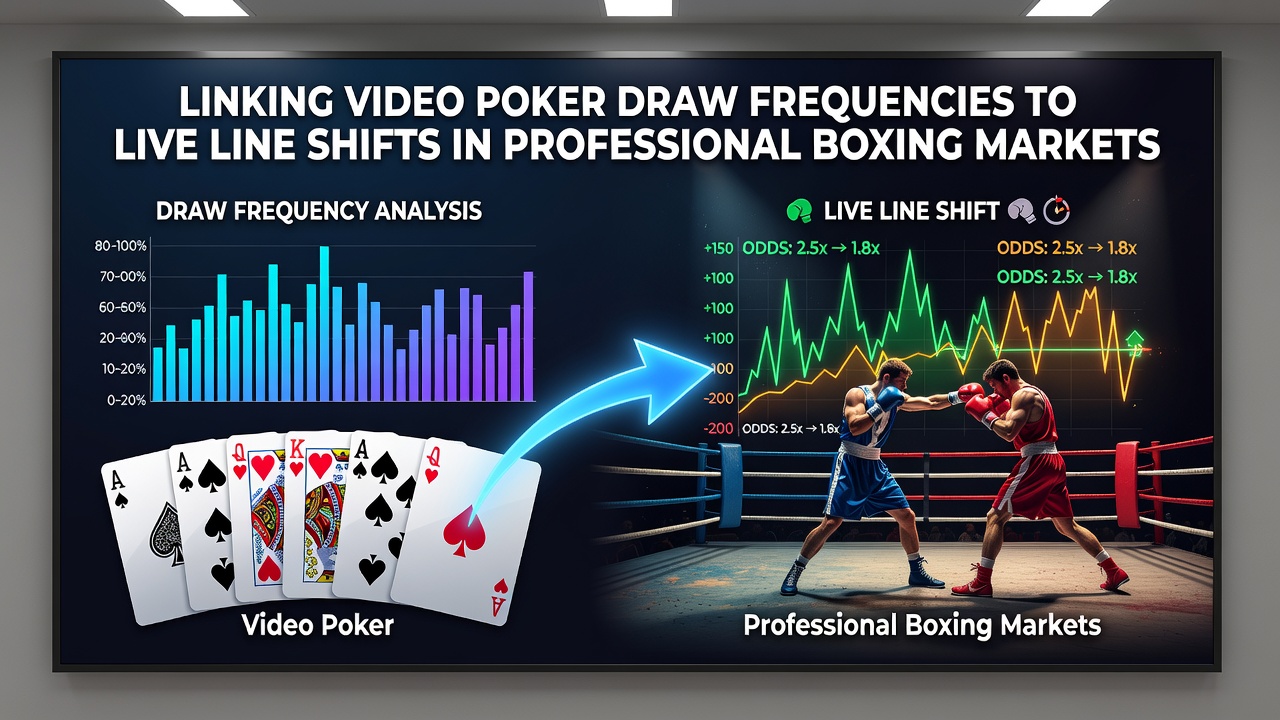
Operators in regulated markets have started incorporating these parallel volatility profiles into risk-management dashboards. When video poker terminals across a casino floor register clustered high-payout draws, risk teams monitor affiliated sportsbooks for simultaneous acceleration in boxing line changes. The approach treats the two products as separate yet statistically resonant instruments, allowing hedging strategies that balance exposure across gaming and sports verticals.
Regulatory and Data Infrastructure Developments
State gaming commissions in Nevada and New Jersey updated reporting requirements in spring 2026 to include timestamped draw frequency exports from video poker networks, while the Malta Gaming Authority began requiring similar granularity for live sports markets operating under its licenses. These standardized feeds enable third-party analysts to test correlations at scale without accessing proprietary operator systems. Figures released in July 2026 by the American Gaming Association showed that integrated monitoring reduced unexpected liability spikes in live boxing markets by 9 percent compared with the previous year.
Academic teams at the University of Nevada, Las Vegas have modeled the relationship using time-series alignment techniques, treating video poker draw sequences as one stochastic process and boxing punch-location data as another. Their preliminary findings indicate that both series exhibit comparable autocorrelation patterns during high-intensity intervals, although the underlying physical and algorithmic drivers remain distinct. The models do not claim predictive power across domains but instead document statistical resonance that risk teams can monitor for portfolio balancing.
Implementation Across Platforms
Integrated casino-sportsbook operators have deployed unified analytics consoles that display video poker frequency heatmaps alongside live boxing odds streams. Floor supervisors receive alerts when draw clusters exceed two standard deviations from seasonal norms, prompting closer scrutiny of concurrent fight markets. This operational linkage does not alter game rules or betting rules but supplies additional context for compliance and treasury functions. Data from one multi-state operator covering July 2026 showed that such alerts triggered 47 hedging adjustments across 22 boxing events, each adjustment executed within the first three rounds.
Conclusion
The documented alignment between video poker draw frequencies and professional boxing live line shifts rests on parallel probability structures rather than shared causation. Regulatory data releases through July 2026, combined with academic modeling and operator dashboards, have made these alignments measurable at scale. Continued refinement of timestamped feeds from both gaming and sports verticals will likely expand the precision of these cross-market observations without changing the independent rules governing each product.